
The Long Life of a Story
The Amazing Maurice and His Educated RodentsThe ending carries the book’s central conflict into the future, showing that some communities change while familiar prejudices persist elsewhere.
increasing Bearing strength in each event
 decreasing
Bearing strength in each eventdecreasingA Town Remembers

A Public Rat Culture
Daily spectacle
Bad Blintz develops clocks, souvenirs, performances, and institutions that make the Clan visible to visitors.
Work beneath the show
The attractions rest on a deeper civic arrangement: the Rats have a recognized community and a place in the town.
A Rat Piper on Payroll
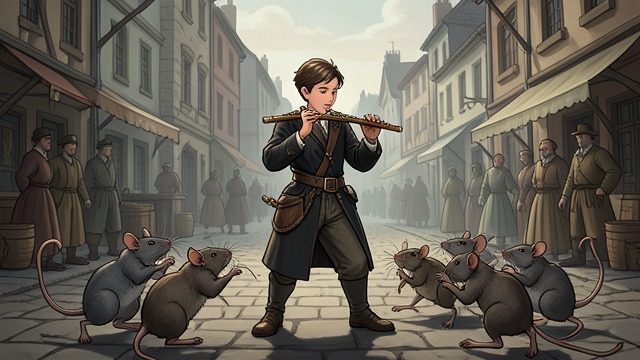
Performance Without Coercion
A regular role
A young town piper plays for the Rats, and their dancing becomes a popular civic event.
A changed meaning
The piper’s work is no longer a threat to drive Rats into danger but a performance within a negotiated relationship.
A Working Rat Society

Institutions Under the Streets
Shared facilities
The Clan receives access to the library, schools, and civic systems while maintaining its underground home.
A fragile achievement
The arrangement is orderly but not perfect, depending on continued participation rather than a single heroic act.
Other Towns Resist

Prejudice Persists
Old habits elsewhere
Many visitors return to their own towns and continue setting traps and spreading poison.
Uneven change
A few people leave with a different understanding, showing that political and moral change travels slowly and selectively.
The Scheme Begins Again

Maurice’s Old Opening
A new boy appears
Maurice follows a foundling carrying his belongings and recognizes another chance to influence someone’s ambitions.
Stories continue
The familiar invitation echoes the opening, suggesting that changed circumstances do not erase old patterns; they create new chances to choose what those patterns mean.
After the human-rat accord
In the town’s later years
During the town’s mature civic arrangement
In the distant aftermath of the agreement
Far downstream, after the town’s prosperity
